In one's eyes, the most important cranial nerve is the optic nerve. The optic nerves are located in the back part of the eyes and are made up of nerve cells and fibers. They are crucial because they transmit visual information through electric impulses to the brain; in other words, your vision. Glaucoma is described as a group of eye conditions that damage your optic nerves. The damage is often caused by abnormally high intraocular pressure, generally speaking if it is 21 or higher. With a high pressure, the optic nerve The higher the pressure, the more suspicious and caution one should be. But having a high pressure in the eye does not always mean that one has glaucoma.

Open Angle Glaucoma
This is the most common type of glaucoma. In the eye, there is a structure called the trabecular meshwork. Its function is to drain fluid, which regulates the outflow. In open angle glaucoma, the structures inside the eye may appear to be normal, but fluid may be passing the angle slowly, which causes a build up of higher pressure. Due to high intraocular pressure, which is caused by excessive fluid in the eye, the optic nerve is compressed, which destroys cells.
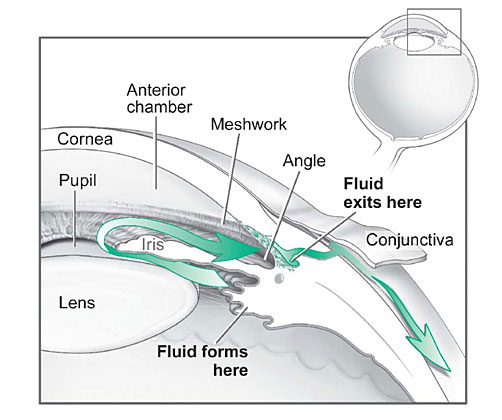
Currently in the United States, it is the leading cause of blindness. Glaucoma is hard to detect until it reaches an advance stage because it has no warning signs. However, if it is diagnosed early enough, it can be treated and kept under control to minimize the damage that could be done. With all the research being done, there is no cure for glaucoma.

Sources:
http://www.aoa.org/patients-and-public/eye-and-vision-problems/glossary-of-eye-and-vision-conditions/glaucoma?sso=y
http://www.mayoclinic.org/diseases-conditions/glaucoma/basics/definition/con-20024042
http://www.webmd.com/eye-health/glaucoma-eyes
https://nei.nih.gov/health/glaucoma/glaucoma_facts
http://www.healthline.com/human-body-maps/optic-nerve

nice topic! it made me more cautious in to look after my eyes, since we put alot of stress on our eys as we are becoming health care providers. I'm wondering what group of people who are in more risk of getting glaucoma? and is there any sign of visual loss like a cloudy background detected by the patients since there is no clear sign?
ReplyDeleteGreat introduction on a topic that is becoming increasingly more apparent in the media. I am intrigued to as if glaucoma itself is hereditary or if there is any genetically linked possibility of developing this condition over time.
ReplyDeleteGreat topic choice! I would like to commend you on your usage of diagrams and pictures to show the difference in those who are unaffected vs. those who have glaucoma. I did not know much about this topic before reading, do you happen to know if there are environmental factors that can lead to this or would it be a gene that is passed down that makes those more susceptible to it.
ReplyDelete